
You have a worthy mission, a donation page, and another appeal to write before the day ends. Then you check the results, and the response is quiet again. When you’re fundraising for nonprofits, you may wonder whether your message reached the right people, whether supporters trust the process, or whether they simply forgot.
Most nonprofits don’t have a generosity problem. They have a trust and participation problem. The National Council of Nonprofits defines fundraising as gathering voluntary contributions, grants, and other resources to support a mission and its operations. That work depends on a clear cause, credible communication, sensible channel choices, and ways for people to stay involved.
Direct appeals, grants, events, peer-led efforts, and recurring community giving can all play different roles. PIFster may fit alongside them as one community-powered giving option, not as a replacement or a promise of donations. Start with a clear cause brief, invite community consideration, build recurring support, and track what each channel contributes.
Fundraising choices that affect trust, reach, and recurring support
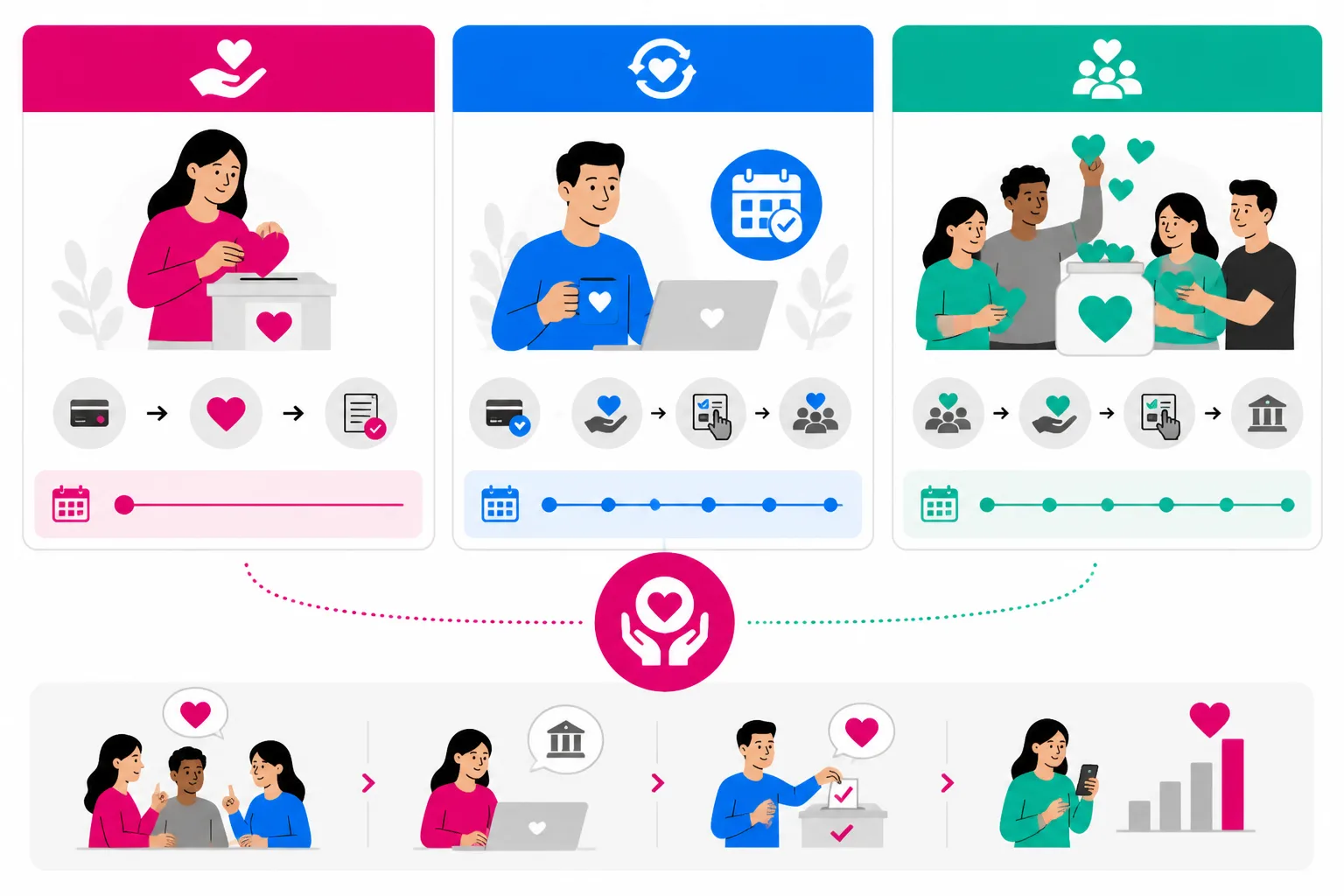
Your fundraising structure shapes what people understand before giving, how easily they can participate, and whether their support can continue after one appeal. If your nonprofit relies mainly on urgent, one-time requests, you may spend more time replacing lost donors than building a dependable base.
Clear terms help. PIFster members make recurring donations starting at $1 per month. At least 90% of each donation reaches the designated cause, and donations are 100% tax-deductible. Those are specific platform facts, not proof of a campaign result or a promise that every donor will stay. For more planning context, review this guide to starting a nonprofit before you choose a fundraising structure.
What donors need to understand before they give
Explain where a contribution goes, what participation costs, and what tax information applies. “Help us today” leaves expectations unclear. “A $25 gift supports our neighborhood food pantry, and your receipt records the charitable contribution” gives you and the donor a clearer starting point.
Before launching, check state charitable solicitation rules, your gift acceptance policy, and IRS guidance. The National Council of Nonprofits says fundraising strategies should comply with state and IRS regulations.
“Fundraising strategies should comply with state and IRS regulations,” according to the National Council of Nonprofits.
How recurring community donations change the relationship
A monthly option lets you invite continued participation without making every conversation an emergency appeal. PIFster offers one community-powered route, though it can’t replace your compliance review, donor communication, or broader fundraising plan.
| situation | better move | why |
|---|---|---|
| You need an accessible recurring entry point | Offer a monthly giving option, including PIFster’s starting point of $1 per month | A small recurring commitment can give supporters a lower-cost way to participate |
| You are explaining what happens to donations | State verified allocation and tax information carefully | Clear expectations support trust and reduce confusion |
| You are applying the 3 to 1 or 80/20 rule | Treat either as a planning heuristic rather than a universal rule | Neither is established here as a required nonprofit standard |
| You are preparing a new campaign | Check state solicitation rules, gift policies, and IRS guidance | Fundraising strategies must comply with applicable requirements |
What the 3 to 1 rule means for fundraising
The 3 to 1 rule is a planning idea, not a universal nonprofit requirement or verified PIFster rule. You might use it to compare three relationship-building touches with one direct ask, but your audience, mission, and channel should determine the mix.
What the 80/20 rule means for nonprofits
The 80/20 rule is also a planning heuristic, not a guaranteed law. A small share of supporters may provide much of your funding, but test that pattern in your own records rather than building your budget on an assumption.
Practical rule: Give donors one clear explanation of cost, destination, and tax treatment before asking them to participate.
When those details are easy to understand, community interest has a fair chance to become sustained support. Before launching, review state charitable solicitation requirements, your gift policies, and IRS guidance for the campaign.
Four fundraising models and the role of a shared community fund
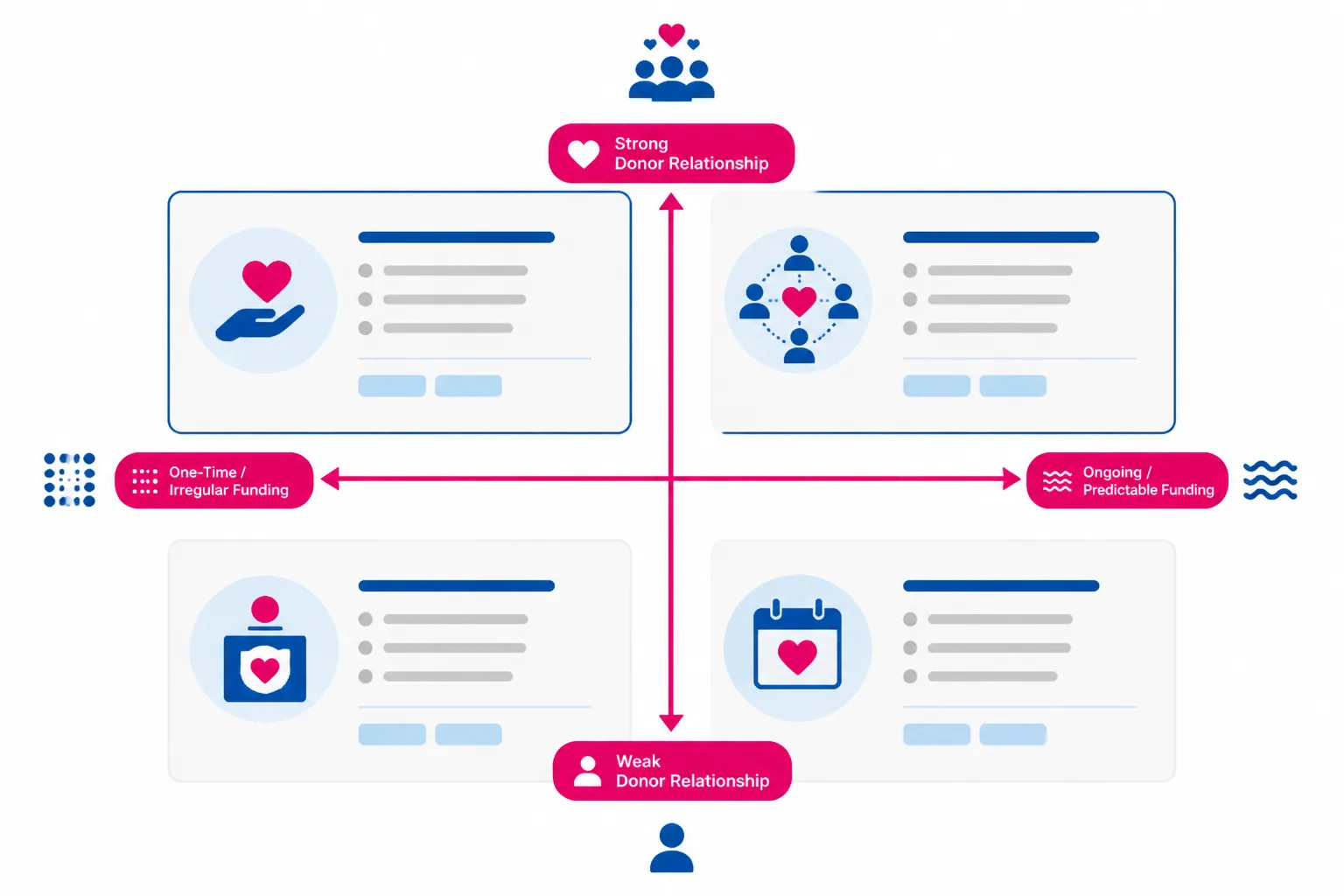
Your nonprofit doesn’t have to choose one fundraising channel forever. Combine individual gifts, institutional support, events, peer-led campaigns, and recurring community giving according to your audience, capacity, and funding needs.
Individual giving includes online donation forms, recurring monthly gifts, peer-to-peer campaigns, and major gifts, according to Blackbaud. Grants may come from private foundations, community foundations, and government agencies. Augusta University says they often suit established programs with demonstrated impact. The useful question isn’t which model is best for everyone. It’s which one fits your next fundraising need.
What makes a nonprofit fundraiser successful
There is no universal, verified ranking of the 10 most successful nonprofit fundraisers for every organization. Your strongest mix depends on your supporters, program history, fundraising staff, and community. Use the four models below to choose your next move.
Individual giving and direct appeals
Individual giving includes online donation forms, recurring gifts, peer-to-peer campaigns, and major-gift cultivation. Use a donation page for immediate support, a monthly option for continued giving, or personal outreach when a supporter has a deeper connection to your work.
Grants, sponsors, and institutional support
Private foundations, community foundations, government agencies, and business sponsors can support established programs. If you can show documented impact, a clear budget, and a defined program plan, research grants that match your work rather than sending the same proposal everywhere.
Events and peer-led campaigns
Events give supporters a shared reason to participate, while peer-led campaigns let them introduce your nonprofit to their own networks. Set a clear purpose, provide simple fundraising materials, and explain where donations go. Use these campaigns alongside direct appeals rather than treating them as replacements.
Recurring community giving through PIFster
PIFster fits the recurring community-giving model. PIFsters contribute at least $1 each month, suggest charities, and vote monthly. The community donation goes to the selected nonprofit, while your organization can continue pursuing individual gifts, grants, sponsors, events, and peer-led fundraising.
| situation | better move | why |
|---|---|---|
| You have individual supporters ready to give | Use an online donation form, recurring gifts, peer-to-peer outreach, or major-gift cultivation | Individual giving includes several routes with different levels of participation |
| You have an established program and documented impact | Research private, community, or government grants | These are common institutional sources and may fit established programs |
| You want supporters to activate their own networks | Use an event or peer-led campaign | Peer participation can extend reach beyond the nonprofit’s direct audience |
| You want recurring, participatory community support | Share PIFster’s community-powered giving model | PIFsters give monthly, suggest charities, and vote on the monthly community donation |
How a nonprofit becomes easier for a community to support
Your donation page can’t explain everything a new supporter needs to know. Add a short cause brief, current facts, a clear funding request, and a simple explanation of what happens next.
Community support also requires patience. You can prepare your charity for consideration, but you can’t promise selection. Combine clear information and regular updates with more than one fundraising channel.
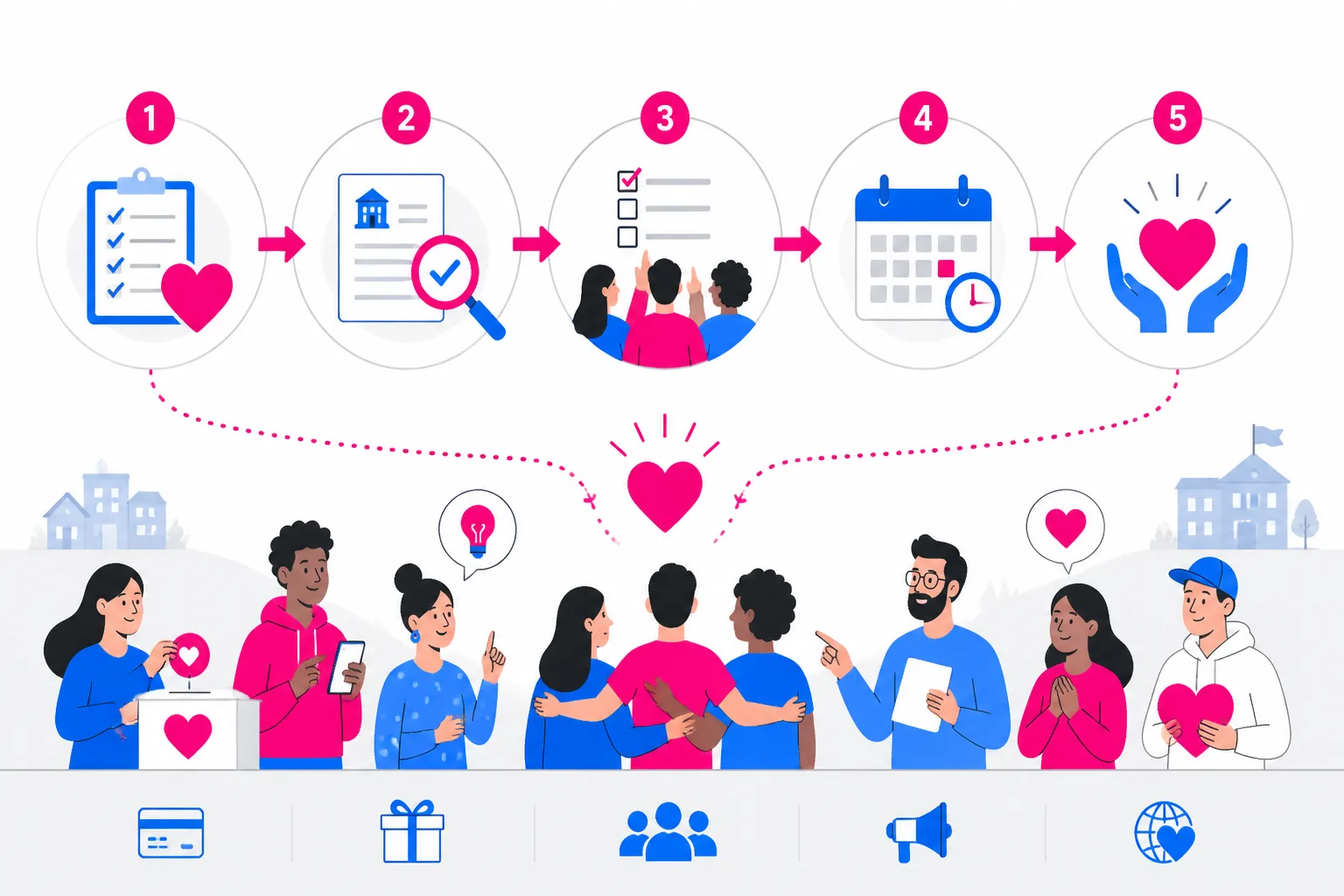
What to prepare before suggesting your charity
Before suggesting your charity to PIFster, prepare four answers: who you serve, what support would fund, where you work, and where people can learn more. Blackbaud recommends a clear case for support, measurable goals, and basic donor tracking through a CRM or spreadsheet.
- Cause brief: Keep a current paragraph describing your nonprofit, community, program, and funding need.
- Internal goal: Record what your organization hopes to fund or learn, without promising a specific community donation.
- Supporter record: Maintain a simple spreadsheet or CRM for contacts, gifts, thanks, and updates.
How to fundraise for your nonprofit
Suggest your charity through PIFster’s charity suggestion page while continuing direct appeals, grants, events, and peer-led campaigns.
How PIFster’s vetting and monthly voting fit together
After you suggest a charity, PIFster vets the suggestion for legitimacy and fit. PIFsters then vote each month, with voting closing at midnight on the last day. The pooled community donation goes to the selected nonprofit, but selection is community-based and never guaranteed. You can review recorded recipients on PIFster’s past charities page.
How to explain the cause without promising a result
Weak: “Help our amazing nonprofit win the biggest donation ever.”
Stronger: “Harbor Street Food Pantry helps families in Cleveland access groceries. Support would help stock weekly food distributions. Learn more at the organization’s website.”
Send prompt, personalized thanks and concrete updates about your work. The National Council of Nonprofits recommends both practices, so supporters can see how their giving connects to your mission.
How to raise a large amount quickly
You can’t guarantee a large amount quickly. You can improve your preparation, reach, and follow-up by combining PIFster with direct appeals, grants, events, and recurring giving rather than relying on one result.
That mix gives people more ways to help your community support the cause, even when one campaign takes time.
Fundraising mistakes that make a good cause difficult to support
You can have a worthy mission and still make giving feel uncertain. Supporters may not know what their money will fund, whether your organization is ready, or how they can begin with a manageable commitment.
Remove those doubts before sending another urgent appeal. Small corrections often matter more.
The one-page campaign mistake
A single campaign page rarely gives you enough room to build trust, explain your work, and maintain support. Use it as one part of your plan, not as your entire fundraising system.
Weak: “Help us raise money for our program.”
Clearer: “Support River Street Pantry’s community food program in Los Angeles. Your gift helps fund weekly grocery distribution, and the page explains the organization’s mission, location, current work, and use of funds.”
Why a GoFundMe campaign may receive few donations
A quiet GoFundMe doesn’t prove your cause is weak. Reach, trust, clarity, timing, and donor fit can all affect how people respond.
Review whether supporters understand the request, whether the page answers basic questions, and whether people beyond your immediate network can find it. Give people another path too, such as direct appeals, grants, events, peer-led efforts, or recurring community giving.
The urgency-without-context mistake
An immediate request for a large amount can feel difficult when supporters have no lower-commitment path. Explain the need, show why it matters now, and offer an appropriate recurring option such as PIFster’s $1-per-month starting point.
The single-channel mistake
Depending on one campaign leaves you exposed when that channel slows. Combine direct fundraising with grants, events, peer-led efforts, and community-powered giving.
What works
- Clear cause brief: You state your mission, location, use of funds, and current organizational details.
- Visible transparency: You use PIFster’s past-charities record as context, not as proof that your nonprofit will be selected.
- Appropriate entry point: You let supporters begin with a manageable recurring option while they learn more.
What fails
- Vague appeal: You ask for help without explaining the work or the funding need.
- Unverified assumptions: You treat community consideration as guaranteed selection.
- One-path planning: You expect one campaign page to create reach, trust, and recurring support alone.
The fee, tax, and reporting assumption mistake
Platform mechanics, tax deductibility, and fees are separate questions, so check each one directly. Explain what your chosen platform does, confirm your nonprofit’s tax status, and keep records for your own reporting responsibilities.
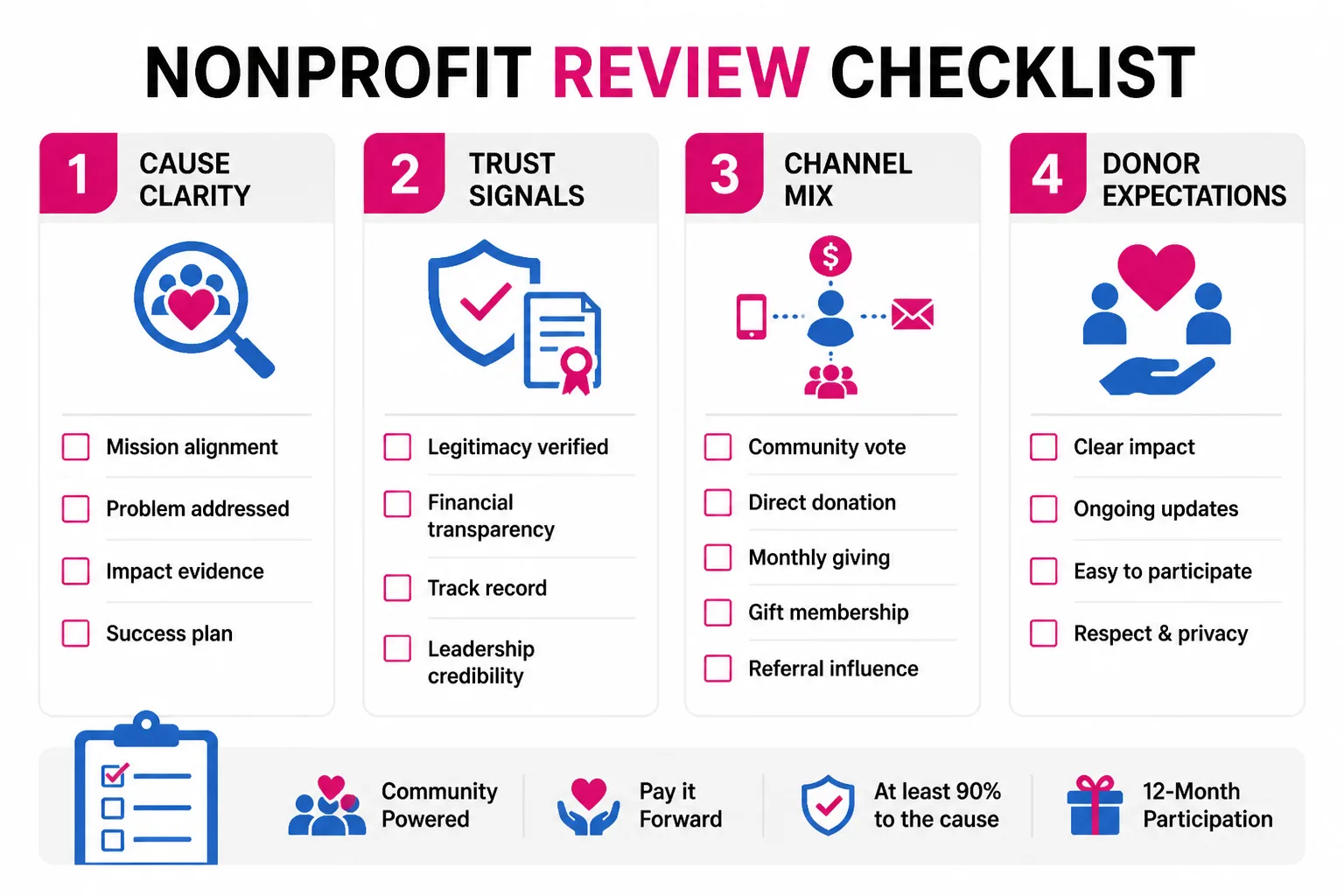
- Cause details: Your page explains who you are, where you work, and what funds support.
- Trust path: Your supporter can read, ask questions, and choose a suitable way to give.
- Channel mix: Your plan includes more than one fundraising route.
Questions about crowdfunding fees, alternatives, and tax reporting
The amount shown on a crowdfunding page isn’t always the amount your nonprofit receives. Fees, payment processing, campaign structure, and tax treatment are separate questions, so you need current platform terms and reliable tax guidance before promising a net result or describing a gift as deductible.
How much GoFundMe takes from $20,000
You can’t calculate the net amount from the campaign total alone. The answer depends on GoFundMe’s current product, payment processing, location, and applicable terms. Check GoFundMe’s own fee page for the campaign type, then subtract the stated charges from the gross funds raised. That calculation still doesn’t answer your tax or reporting obligations.
What a quiet crowdfunding campaign can tell you
A quiet campaign may reflect limited reach, unclear details, weak trust signals, poor timing, or an audience mismatch rather than the quality of your cause alone. Review who sees the page, what the funds will support, and how easily someone can verify your organization. You may need a clearer message or a different channel, not a different mission.
Whether another option may suit your nonprofit better
There is no single best platform for every nonprofit, but you may prefer PIFster if you want community-powered giving, recurring member support, charity suggestions, and monthly voting. PIFster can sit alongside your donation page, events, grants, and campaigns. Its community model isn’t a substitute for every fundraising need, so match each channel to your goals.
What GoFundMe may report to the IRS
You shouldn’t assume a blanket answer. Reporting and tax treatment can depend on the campaign structure, recipient, and applicable rules. Separate the gross funds raised from platform fees, then confirm current IRS guidance and GoFundMe documentation for your situation. You may also need advice from a qualified tax professional before reporting donations or issuing tax statements.
A clearer next move for your nonprofit fundraising plan
You don’t need another unfocused campaign before you know what each channel should accomplish. Start with one cause, one audience, and one useful page that gives people enough confidence to consider supporting you.
Your next step isn’t to promise selection, funding, or speed. Make your nonprofit easier to understand, then place that clear case where direct donors, recurring supporters, institutions, and community-led platforms can assess it.
1. Write the cause brief
State the immediate need, the people affected, the support requested, and why your nonprofit is prepared to act. Keep the brief specific enough for a reader to understand without opening several pages.
2. Choose the right mix of channels
Use direct appeals for individual gifts, institutional funding for larger support, events or peer-led campaigns for shared participation, and recurring channels for continuity. Each channel needs a job, not just another link on your website.
3. Prepare the community-facing explanation
Before your cause is considered by a community, gather current organizational information and a clear case for support. Your checklist is:
- Cause: A plain statement of the need and the people your work serves.
- Request: A specific explanation of what community support would help fund.
- Organization: Current information that helps people assess your nonprofit.
- Update: A realistic plan for thanking supporters and sharing concrete progress.
4. Start with the charity suggestion page
Use the following sequence today. PIFster reviews suggested charities for legitimacy and fit, members suggest causes, and members vote monthly. Voting closes at midnight on the last day of the month, and the community donation goes to the selected nonprofit. That process doesn’t promise that every suggested charity will be selected.
- Define: Write the cause, audience, immediate need, and requested support on one page.
- Prepare: Add current facts and the clearest case for community consideration.
- Combine: Assign a purpose to each direct, institutional, event, peer-led, and recurring channel.
- Review: Check PIFster’s verified suggestion, vetting, voting, and community donation process.
- Track: Record what each channel does, then send timely thanks and concrete updates.
Start with the cause brief, then use PIFster’s charity suggestion page to submit your nonprofit for consideration. Can a new community understand the need and the reason to support it? If not, revise the page before you send another appeal.
If you want a community-powered way to support recurring giving, PIFster lets people give from $1 per month, suggest and vote on causes, and support selected nonprofits through a shared fund. The PIFster blog’s practical giving guides can help nonprofits and community-minded donors plan their next step.