
You want your small business to support good causes, but choosing a nonprofit, setting a process, and keeping employees involved can take more time than your team has. When you search for corporate giving programs for small businesses, you’re looking for a simple way to give regularly and let people take part.
PIFster is a 501(c)(3) nonprofit founded by Shashana Kaplan and Chris Conlee. Members can make monthly donations starting at $1, receive vetted charity suggestions, suggest causes, and vote each month on where the pooled community donation goes.
Voting closes at midnight on the last day of each month. The nonprofit selected by the community receives the pooled donation. That gives a small business a repeatable way to support causes without choosing a new recipient alone every month.
Corporate giving programs for small businesses with community participation
PIFster is built for people who want a voice in giving. Members contribute monthly, review vetted suggestions, and vote on the nonprofit that receives the community’s pooled donation. The process is clear: participate during the month, cast a vote before midnight on the last day, and see the selected nonprofit receive the pooled funds.
The Real Cost of an Unstructured Corporate Giving Program for Small Businesses
You can donate with good intentions and still create confusion inside your business. Without a written process, you may change recipients from month to month, leave employees unsure how decisions are made, or promise customers support you cannot document.
The cost is usually operational before it’s financial. A clear program helps you explain who approved the gift, why the recipient qualified, what employees may expect, and whether the payment was a charitable contribution or a promotional expense.
How PIFster supports business giving
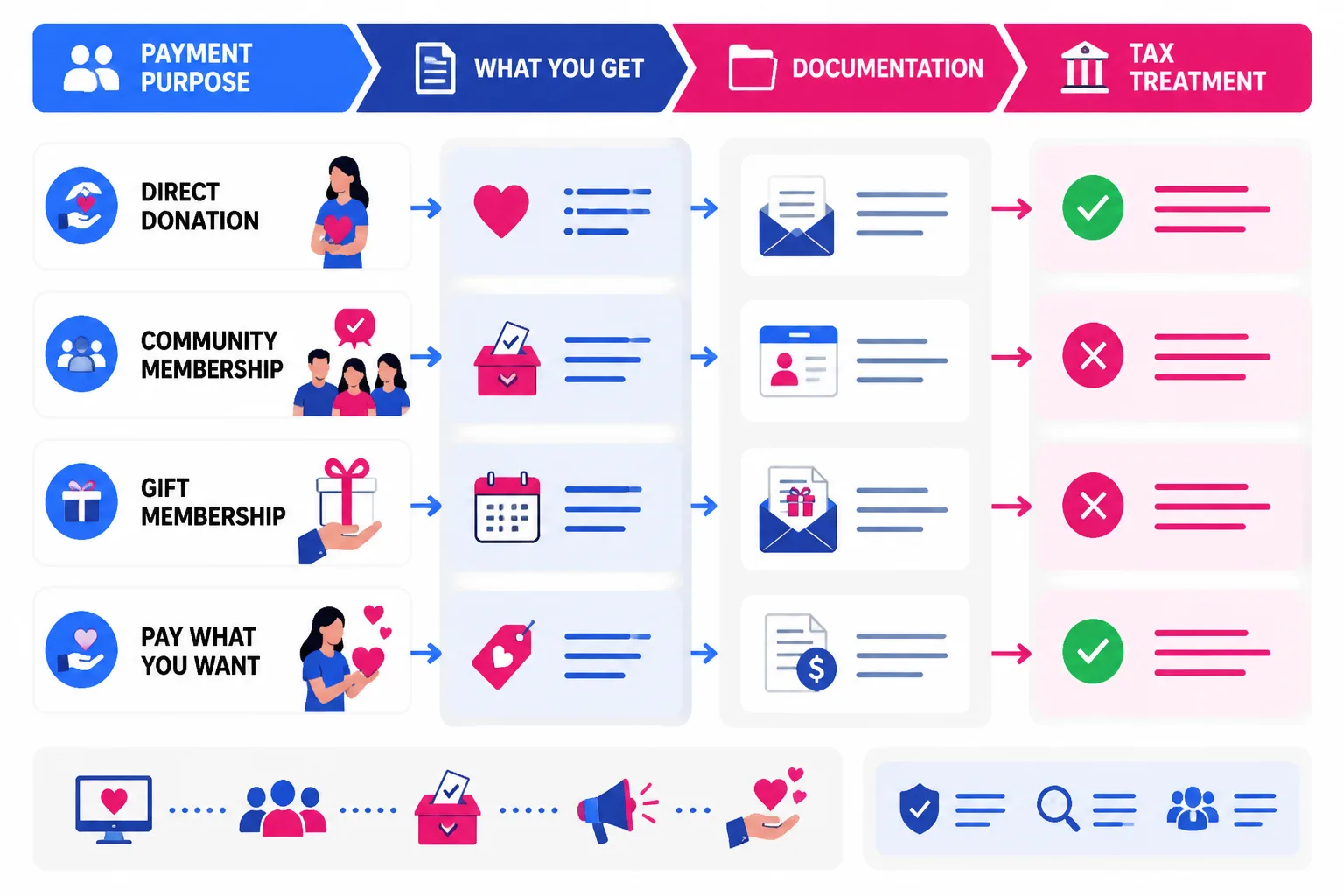
PIFster gives businesses a way to support monthly participation without asking one person to make every choice. Employees can take part in the same community vote as other members, suggest causes, and help direct the pooled donation to the selected nonprofit.
The program is centered on giving, not promotional claims. Your business can decide whether PIFster’s shared monthly vote fits the way your team wants to support causes.
How a Small-Business Giving Program Works
The right giving method depends on your budget, your people, and the participation you want. A cash transfer, employee volunteer program, customer round-up, and shared community vote solve different problems.
Choose based on the decision you need to make, not on a trend. That gives your five-person business a program it can run, document, and explain without promising that every contribution is tax-deductible.
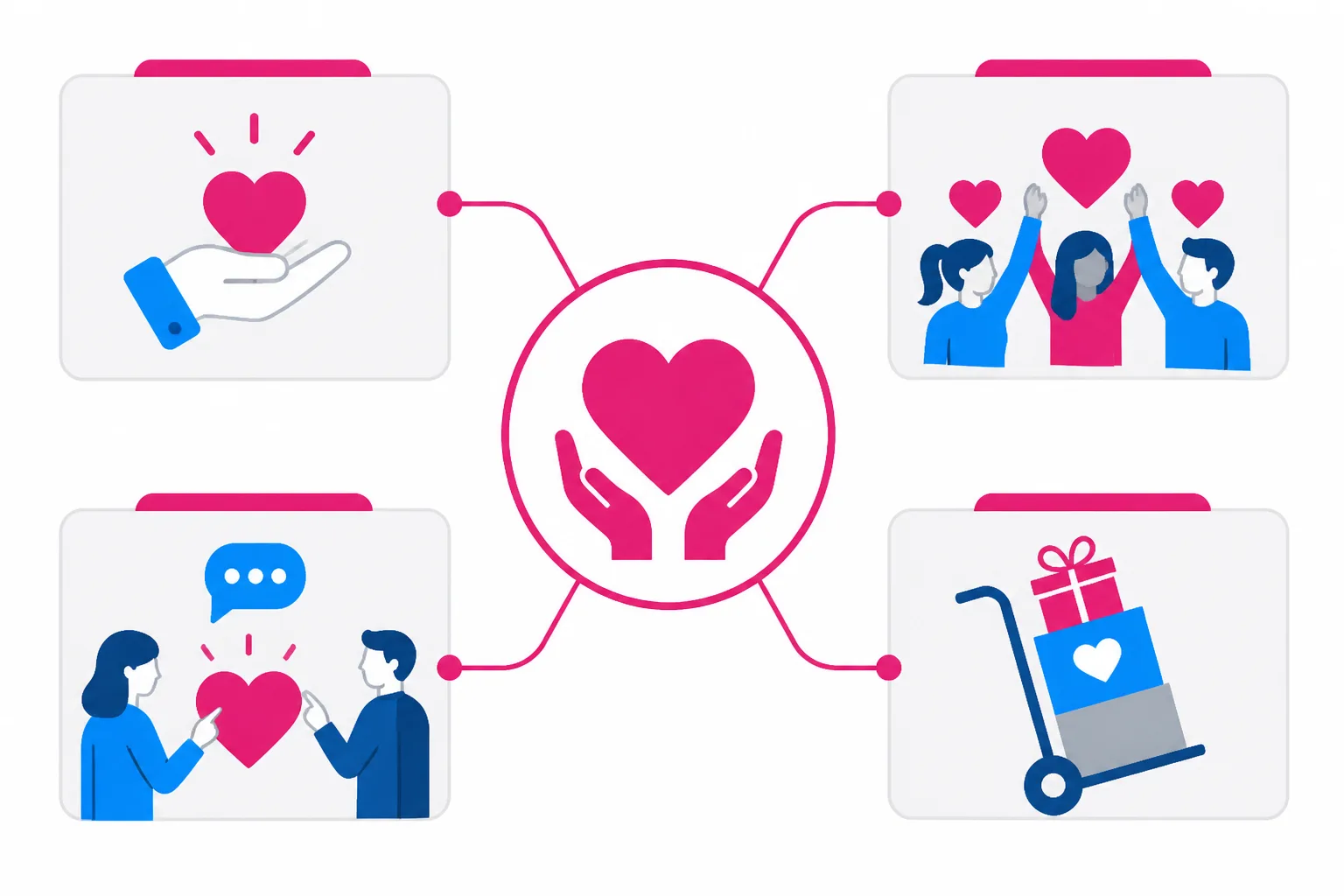
Four program mechanisms and the business problem each solves
- Direct financial support: You give a defined amount to a qualified nonprofit when predictable cash support matters most.
- Employee participation: You can match employee donations to eligible 501(c)(3) nonprofits, commonly at a 1:1 ratio with an annual cap per employee, according to 360MatchPro.
- Customer participation: You can connect giving to purchases through cause marketing or checkout round-ups, according to 360MatchPro.
- Non-cash contribution: You can provide products, gift cards, space, or professional skills such as legal, accounting, or marketing help. GoodUnited identifies these as common in-kind and pro bono gifts.
Volunteer grants, also called Dollars for Doers, give a nonprofit a set amount or hourly rate after an employee volunteers or serves on a nonprofit board, according to 360MatchPro.
Worked example: turning a modest monthly budget into a repeatable program
A five-person U.S. business could set a $150 monthly ceiling, invite one cause suggestion from each employee, and hold a private vote. You would verify the selected nonprofit, approve the payment, save the receipt, and record the transfer date and amount.
Weak report: “The team supported a local charity.”
Strong report: “In May, the team approved $150 for River County Food Bank after employee voting. The transfer was completed on May 31, and the receipt is stored with the payment record.”
| situation | better move | why |
|---|---|---|
| Employees want their personal donations amplified | Use a matching-gift policy with a stated ratio and annual cap | The program links employee participation to eligible 501(c)(3) donations and a predictable company budget |
| Employees want recognition for hands-on service | Consider a volunteer-grant or Dollars for Doers structure | The company can provide a set amount or hourly rate after qualifying volunteer work |
| The business has useful products, space, or expertise | Offer an in-kind or pro bono contribution | Non-cash support can provide practical value without relying only on cash |
| Customers want to participate at checkout | Use a round-up or cause-marketing campaign with clear terms | Customers can contribute through purchases while the business reports the amount and recipient |
| Employees or customers want a shared vote on recurring causes | Evaluate PIFster for contributions starting at $1 per month and community selection | Members can suggest and vote on causes while directing a shared fund to the selected nonprofit |
Where PIFster fits for a small business
PIFster works when your employees want to participate in a monthly vote rather than leave every giving decision to the owner. Monthly donations start at $1. Members receive vetted charity suggestions, can suggest causes, and vote until midnight on the last day of the month. The nonprofit with the most support receives the pooled community donation.
The Sponsor tier for employee participation
With the Sponsor tier, a business sponsors memberships so its employees can participate in the monthly vote. PIFster publicly recognizes sponsors on its website, social media, and email outreach, and sponsors appear on a leaderboard.
This gives your team a shared way to take part in giving while keeping the business’s role clear: it sponsors memberships, employees participate in the vote, and the PIFster community directs the pooled donation to the selected nonprofit.
Corporate Giving Programs for Small Businesses and Nonprofit Governance
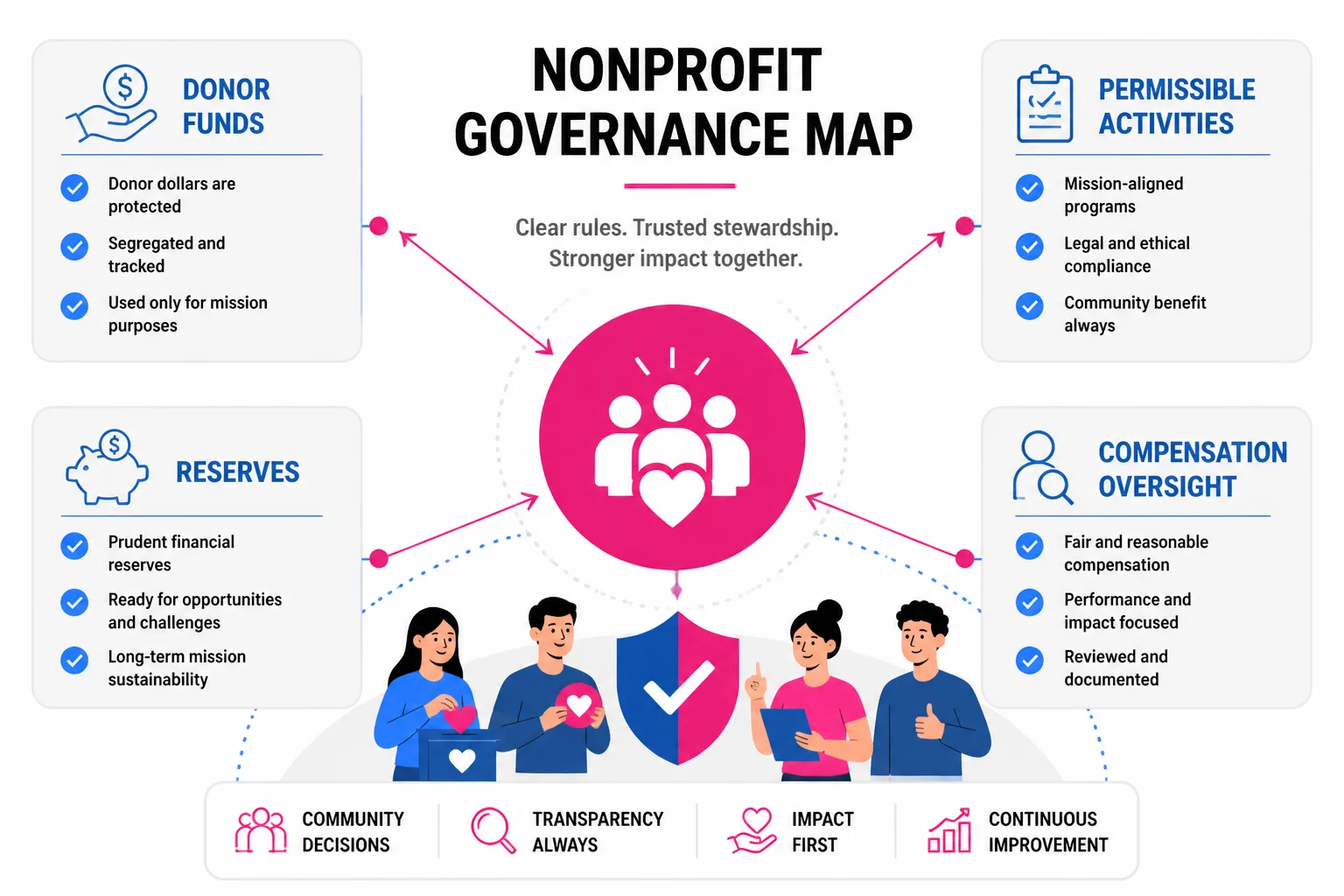
Choosing a charitable recipient is only the first governance decision. You also need to understand how the nonprofit handles restricted gifts, reserves, compensation, political activity, and public accountability.
Your business can ask practical questions without treating general internet advice as a legal answer. The right decision depends on the nonprofit’s governing documents, public filings, applicable IRS rules, state requirements, and qualified professional guidance.
Why donor-advised funds attract both praise and criticism
Donor-advised funds attract praise for privacy and administrative convenience, but criticism for delayed distributions and concerns about donor control. You may value a DAF when you want a simple contribution process without publicly naming your business, while other donors question how quickly funds reach operating nonprofits.
What works
- Privacy: You may prefer a giving structure that doesn’t publicly identify every donor.
- Administration: You can reduce paperwork when the sponsoring organization handles processing and records.
- Choice: You may recommend grants while accepting that the sponsor retains legal control.
What fails
- Assumed control: You shouldn’t describe a recommendation as a guaranteed grant.
- Unexamined delay: Ask how distributions are timed and communicated.
- Privacy confusion: Limited public visibility isn’t proof of misuse.
The 33% rule isn’t a universal nonprofit requirement
The commonly searched “33% rule” isn’t a universal nonprofit requirement. Identify the exact rule, source, transaction, and tax context before relying on that label.
What nonprofit status permits, restricts, and requires
A 501(c)(3) organization may conduct limited lobbying but cannot intervene in candidate campaigns. You should also check whether a restricted gift matches the nonprofit’s governing documents and intended charitable purpose.
Paying yourself when you run a nonprofit
You may receive compensation if the payment is properly authorized and reasonable for the work. Review conflict-of-interest procedures, comparables, board approval, public filings, and applicable IRS and state requirements.
How much money a 501(c)(3) can keep in the bank
A 501(c)(3) may hold reserves when the amount supports its charitable purpose. Ask whether the reserve policy, budget, and board records explain why the cash is being held.
What counts as a reasonable nonprofit CEO salary
A reasonable nonprofit CEO salary depends on duties, organization size, location, comparable compensation, and documented approval. Treat a large salary or unpaid leadership as a question for review, not automatic evidence of wrongdoing.
Weak policy: “The business gives to approved charities and pays fair salaries.”
Clear policy: “The board reviews recipient status, gift restrictions, reserve policies, political activity, and executive compensation before approving support.” Use official IRS materials, state guidance, and qualified counsel or accountants when the facts become specific.
Five Ways Corporate Giving Programs for Small Businesses Go Wrong
A promising donation can create confusion when you announce it before deciding what your business can actually fund. You may also blur charitable support with promotion, then struggle to explain the difference to employees, customers, or the nonprofit.
These failures rarely come from bad intentions. They come from missing records, unclear authority, and claims that say more than your business transferred. Use this checklist before launch.
The unbudgeted promise
- Check the commitment: If you promise to donate “a portion of every sale,” your team needs a written ceiling and approval rule first. Weak: “The business will donate regularly.” Strong: “The owner approves up to $250 monthly, with any increase recorded before the campaign begins.”
The sponsorship presented as a donation
- Separate the exchange: Your receipt should preserve the donation amount, while your agreement lists advertising, tickets, signage, or social posts separately. A nonprofit’s logo on your storefront doesn’t turn a paid sponsorship into a charitable gift.
The unchecked recipient
- Review the recipient: Confirm the organization’s charitable status, mission fit, payment details, and restrictions before approval. Keep the receipt and transfer confirmation with the decision record, not only in an email inbox.
The vote with no decision rule
- Explain participation: If your business uses PIFster or another community-powered model, tell employees who may suggest causes, how voting works, and when funds are awarded. Weak: “Employees choose the charity.” Strong: “All staff may suggest a cause, members vote monthly, and the approved fund goes to the winning nonprofit.”
The impact claim with no evidence
- Report the transfer: State what your business actually sent, when it sent it, and to whom. Don’t describe a pledge as a donation or claim meals, scholarships, or services without documentation from the recipient. Before launch, confirm that the budget is approved, the recipient is reviewed, the terms are separate, the records are preserved, and the reporting matches reality.
How to build a small-business giving program
A workable giving program starts with decisions your team can repeat. Set a budget, define eligible causes, and decide whether the business, employees, customers, or a shared group will choose the recipients. Those choices should fit your cash flow and your company’s actual capacity, not an ambitious plan that becomes difficult to maintain.
Keep the first version small. A monthly fund, a short list of eligible organizations, and a simple approval record can give your program structure without creating a new administrative burden. Review the arrangement after the first quarter, then adjust the budget or participation rules using what your records show.
Build participation into the process
Give people a clear way to suggest causes and explain how selections are made. If employees or customers vote together, set a closing date, record the result, and state who has final approval. That balance protects the business from unclear commitments while giving participants a meaningful way to help their community.
Keep business records separate
Record charitable gifts separately from sponsorships, marketing purchases, and employee benefits. Save the recipient’s legal name, payment date, amount, approval, and receipt in one place. When a contribution includes promotion or another business benefit, ask a qualified tax adviser how to classify it before describing the payment as a charitable gift.
FAQ
Can my company donate to charity
Yes. A company can generally give money or eligible property to a qualified charitable organization, subject to its business structure, tax rules, and internal approval process. The company should verify the recipient, keep the receipt, and record whether the payment is a charitable contribution, sponsorship, advertising expense, or employee-related benefit.
Are charity donations 100% deductible
No. A deduction usually reduces taxable income rather than returning the full gift in cash. The treatment depends on the business structure, the recipient’s status, the amount, and any benefit the company receives in return. Keep the acknowledgment and ask a qualified tax adviser to confirm the applicable limit before filing.
Why are DAFs controversial
Donor-advised funds, or DAFs, are controversial because money can receive a charitable tax benefit before a named nonprofit receives a grant. Supporters value the funds’ flexibility and administration. Critics question donor anonymity, fees, and how quickly assets are distributed. A business considering a DAF should review its reporting, control, and grant-making expectations first.
What is the 33% rule for nonprofits
The “33% rule” often refers to a public-support test used in determining whether an organization qualifies as a public charity. It generally concerns the share and type of support an organization receives, not a rule that limits every donation to 33%. The calculation is technical, so the nonprofit or a qualified adviser should confirm its status.
What is a 501c3 not allowed to do
A 501(c)(3) organization can’t participate or intervene in a political campaign for or against a candidate. It also can’t use its assets for private benefit, and substantial lobbying can threaten its tax-exempt status. Some activities may be allowed when they serve the exempt purpose, but the boundaries depend on the facts and the organization’s records.
Choose a corporate giving program your team will use
A small business giving program should make participation easy to understand. PIFster gives employees a monthly way to suggest causes and vote on the nonprofit that receives the pooled community donation.
If your business wants employees to take part, the Sponsor tier sponsors their memberships. PIFster recognizes sponsors on its website, social media, and email outreach, with a sponsor leaderboard for public recognition.
Set the budget and purpose
Write the cause area and annual ceiling first. Then divide that ceiling into a monthly amount if recurring giving fits your cash flow. Keep the purpose specific enough to guide choices, but broad enough to include credible local and national nonprofits.
Choose the decision and payment mechanism
Decide whether your business will make direct gifts, match employee contributions, invite customer round-ups, or use a community-powered giving platform. Set who may suggest causes, who votes, and who approves each payment. If shared voting and low-cost recurring participation fit your goals, evaluate PIFster alongside other options, while checking whether its community-led model suits your preferred level of control.
- Define the purpose: State the eligible cause area and the maximum annual amount.
- Choose the mechanism: Select direct giving, matching, customer participation, or a platform-based fund.
- Set participation rules: Explain who may suggest causes, how selections are made, and who gives final approval.
- Verify the recipient: Review the nonprofit and confirm the expected tax treatment with a qualified adviser.
- Record each transfer: Keep the recipient, amount, date, authorization, and supporting receipt together.
- Report plainly: Tell participants what the business sent, when it sent the funds, and what remains undisclosed.
Verify, document, and communicate
Separate charitable support from sponsorship, advertising, and employee benefits in your records. An LLC-versus-nonprofit decision is structural and fact-specific, not simply a charitable-giving choice. Preserve receipts and state only what the recipient can support.
Start with a one-page giving policy
- Budget: Record the monthly or annual ceiling and the approval authority.
- Recipients: Define eligible organizations and exclusion rules.
- Participation: Explain who may suggest causes and how voting or selection works.
- Disclosure: State what the business will publish about transfers and outcomes.
- Records: Set retention rules for receipts, votes, approvals, and reports.
- Review: Schedule the first policy review and the conditions that trigger an earlier update.
Give your employees a clear way to participate each month. With PIFster, they can suggest causes, review vetted charity suggestions, and vote before midnight on the last day of the month.
Ready to give your team a voice in monthly giving? Sponsor employee memberships through PIFster and help your employees participate in the vote at PIFster’s giving resources.